GopherCon 2026 Recap
Ed Sutherlin
I just got back home recently from Seattle after attending GopherCon 2026. Just like in 2023, I had a great time yet again. I always come back feeling inspired after seeing all the amazing things happening in the Go community. I figured I write up a little recap this time to help reflect on what all went down. Also maybe this post might give someone an idea on what to expect if they’ve never been 🤷🏽♂️.
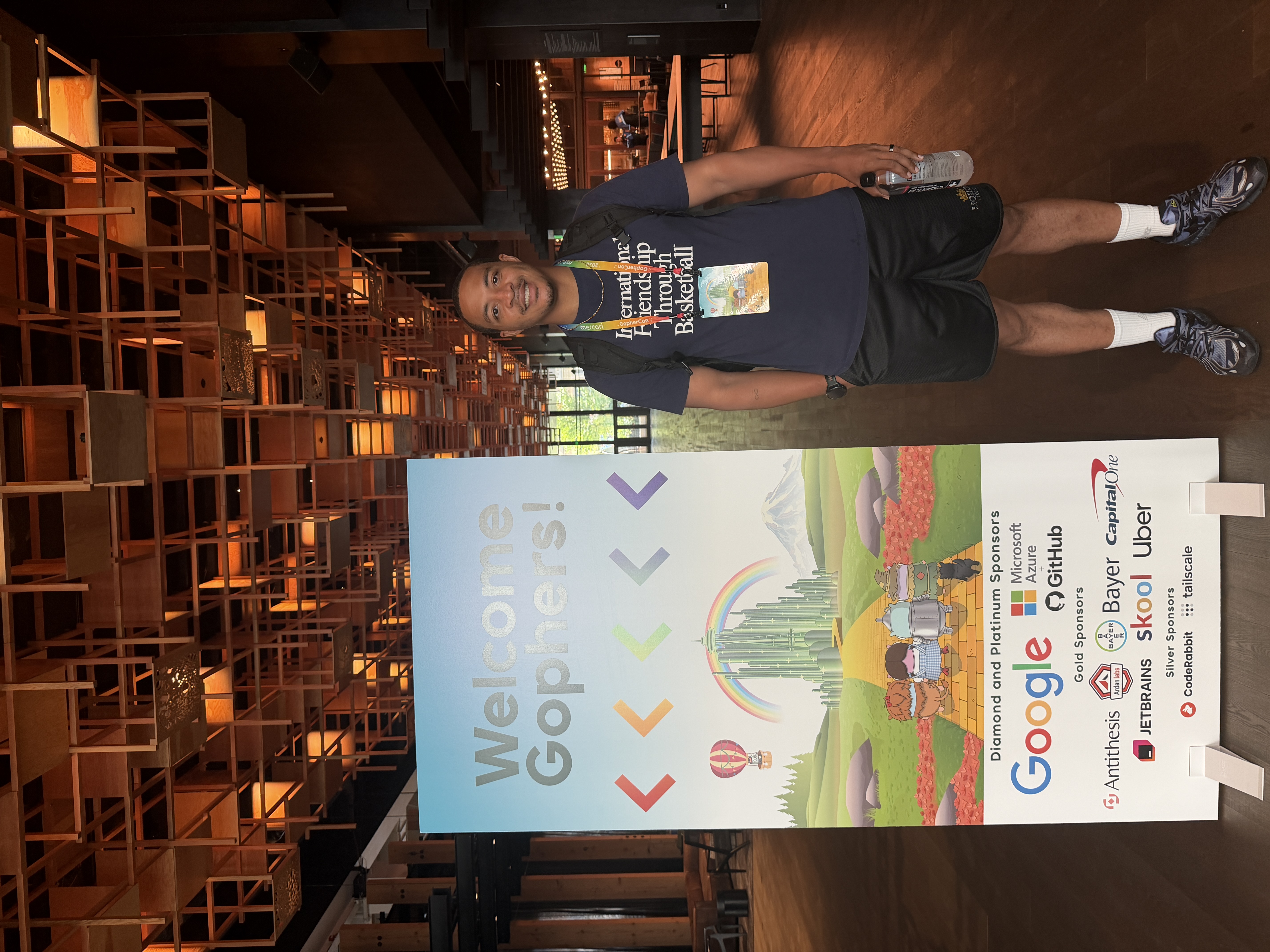
This isn’t ranked in any particular order or anything like that, I was just jotting down notes over the course of the conference.
The Go community is great
This was something I learned from the last GopherCon, and nothing has changed here. The Go community just has a lot of genuinely good people. It was good seeing my guy Patricio again, he works on the TinyGo compiler. When we first met in 2023, I wasn’t able to attend the TinyGo hardware hack session due to me having a few paid workshops lined up, but I made it this time around.
I also met a few people who were attending GopherCon for the first time. It felt good to hear they were having a good time just like I did. I heard that half of GopherCon attendees are usually first timers which was pretty interesting, but also really great. You get a good mix of people coming year after year, but also some newbies.
I’m typically someone who stays to myself, it usually takes me a while to open up. The Go community makes it easy though. I met a few other Gophers at the United Go meetup hosted by Johnny Boursiquot, Chris Nyaga, and Vladimir Vivien. We pretty much ended up hanging out for the duration of the conference, grabbing lunch together, and going out for drinks. This is one of the best parts of attending any conference.
Interesting Workshops
Given I did the paid workshops last time and missed some of the free workshops, which also seemed interesting, I wanted switch it up this time. I ended up doing two workshops, the TinyGo hardware hack session and Microsoft’s AI cupcake workshop.
TinyGO workshop
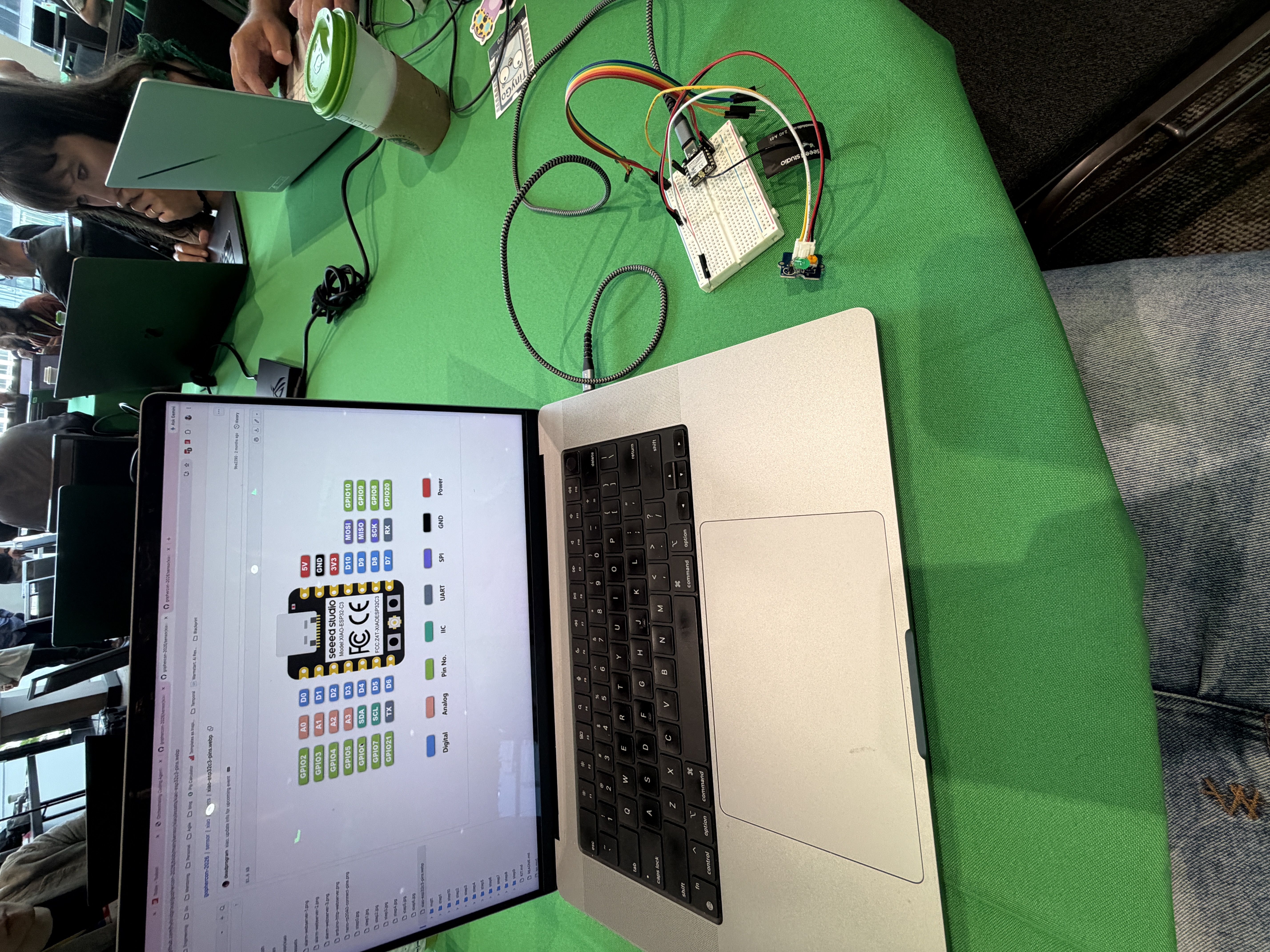
I just wanna preface this first, I know absolutely nothing about working with hardware. I took some electrical engineering courses in college (feels like centuries ago at this point), and that was where I realized I just didn’t have it in me. Despite this, I still have an interest in robotics. The idea of writing code that can operate a drone just feels like a real badge of honor to me. Did I fly a drone in the TinyGO workshop? Not really 😅. But I DID learn some new things and that’s all that matters.
I learned about how to use breadboards and got a refresher on positive/negative currents and grounding. My crown achievement was flashing code to the breadboard that would get this LED light to blink. The code was easy to understand too, it was a good first step for a hardware novice like me.
By the end of the workshop I definitely wanted to learn more and take it further, so I’d say it was a success. There were other people there who got their robots to dance and fly drones, that’ll be me next year haha. Who knows, maybe I’ll get advanced enough to even contribute to TinyGO one day. One step at a time.
Microsoft AI Cupcake workshop
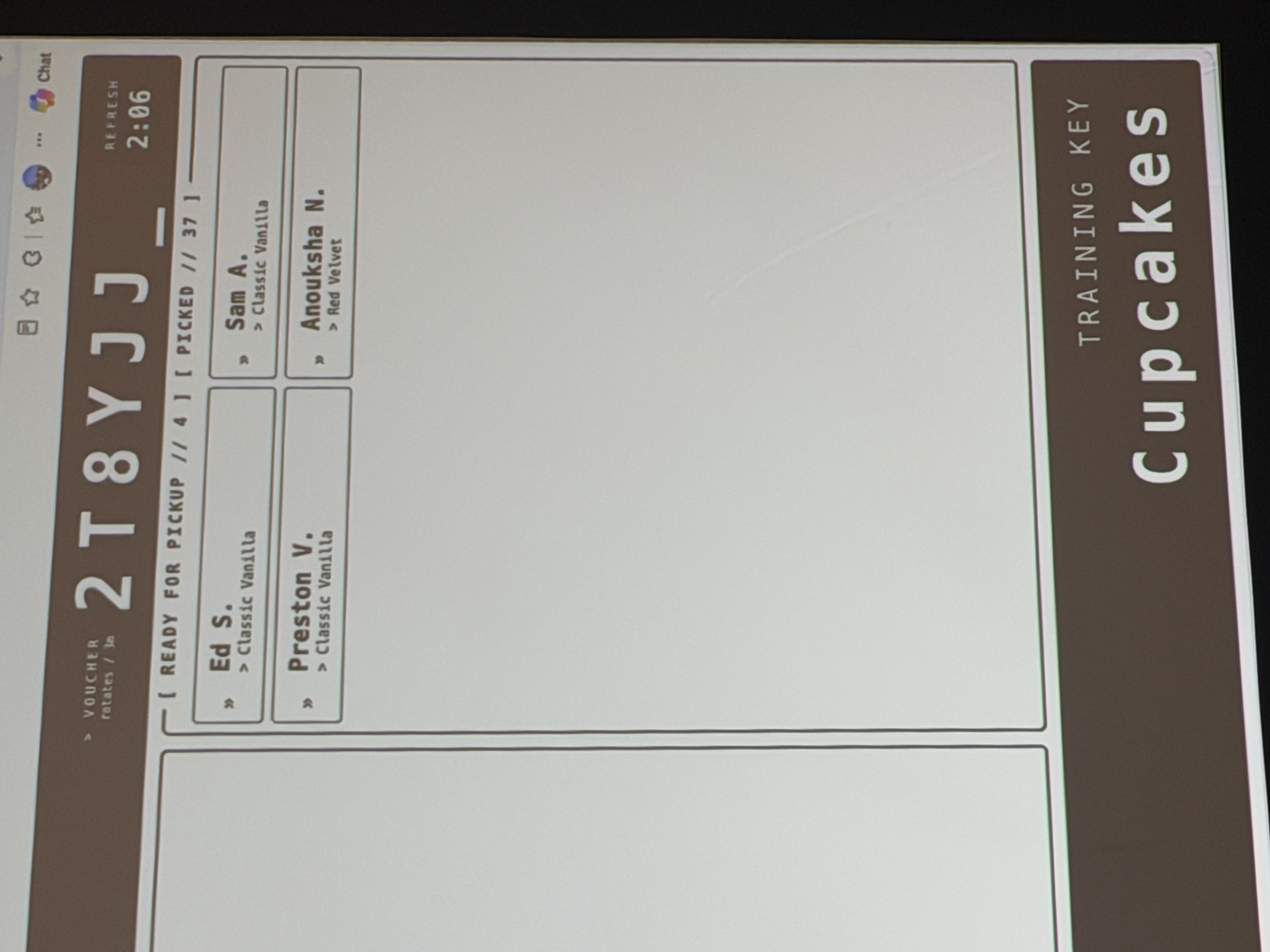
In the Azure lounge, Microsoft hosted a workshop that lets you stand up an agent that integrates with an MCP server to order a cupcake. Like, a real cupcake. I left with a cupcake in hand that I actually ate and it tasted good. I’m not a big sweets guy, but I smashed that cupcake. Given I’ve done a few side projects that involved simple agent loops and API calls to LLMs, this was definitely more my speed.
The main selling point of the workshop was Microsoft’s Foundry platform. It’s basically their AI agent platform for building out agentic workflows. I haven’t really played with agent harnesses and platforms on this level, so it was cool to see that providers and tooling around building out agents had gotten this far.
The project started off with a simple example that could answer basic questions and thats it. By the end, it was able to remember things like my favorite color, tell me what cupcakes were on the menu, which ones were in stock, and let me place an order through the MCP server.
Foundry has about ~1600+ other MCP servers for all sorts of use cases which could’ve been integrated next, but the workshop stopped at the cupcake. I could have added a calendar MCP server, a weather MCP server, and a bunch of other servers to build on what I did in the workshop. I could’ve had my agent order a certain cupcake based on the weather, the day of the week, etc.
We don’t use Microsoft’s platform at my current job, but for me, interacting with a platform like that was an eye opener. I’ll be on the lookout to see if AWS or Google has something similar.
The Conference talks
There were some amazing talks in this year’s conference. I’ll speed run this section a little bit, but just know that when the talks get released, they are worth checking out for sure!
Talks from the Go team
These are some of my favorite talks. I can’t exactly pinpoint why, but they always seem so insightful. I’m a huge fan of Go, so I’m always interested in what the people working on the language have to say about it. I can’t imagine what it’s like to maintain a language, but I definitely have being a Go contributor on my wishlist. Ironically enough, the conference’s opening talk by Go’s tech lead Austin Clements kind of touched on that. I’m also pretty excited to see the new features get added to the language, how I can leverage them, and how I might contribute.
There was also a lightning talk given by the Go team’s Developer Relations lead, Marc Dougherty. He quickly touched on the work he’s doing to make it safer to work with agents without having to give them your authentication keys. Instead of all engineers working with a single instance of their own agent of choice, he’s looking for a way to host a single agent resource that everyone can work with. He shared a project that he’s experimenting with to achieve this.
Go and {A}I Save the Bees
This talk was given by Cassie Coyle and was easily one of the best talks of the whole conference. Cassie basically built out a distributed system that integrates with LLMs to help her manage beehives. I’ve never seen anything like it, it was like a side project on steroids. I left that talk thinking, like man, I got to dig up one of my old side projects and get back it back in rotation. She mentioned using langchain/langraph, which I now plan on using of for my own agentic projects. Shoutout to Cassie for the inspiration.
Inside Out: Observing Go from Code to Kernel
This was another banger presented by Donia Chaieloudj and it got pretty deep to be a 25min talk. I really enjoy programming topics that get down to the kernel/OS level. It’s not something I think about often when writing my own code, but knowing about that type of stuff always makes me feel like an expert.
I walked away from this one with a few topics/questions as well. I saw her using a tool called Jaegar UI to display traces from the demo. She took the observability down to the Go runtime, which I feel like I don’t know enough about either. Then there’s eBPF, which I heard about for the first time during this talk. I’ll be digging deeper into all of these things at some point in the near future.
What slog Left on the Table
We use slog in one of our backend services at work, so I found this talk to be pretty relevant. It was given by Dylan Bourque and touched on a few things. At scale, he talked about how there are some gaps in the slog package and some extensions he created to address those gaps.
One of the extensions was a custom handler that made it easier to work with logs during tests while surpressing any unnecessary log noise. I’ll admit I was a little distracted during this talk, but I have the slides so I’m gonna go back and review to see what can be pulled from this for work.
Receipts from the Go Linker: Auditing the Cost of Dependencies
Another one of those low level bangers, given by Mikayla Toffler. I learned how the Go compiler strips unused/unreachable code from dependencies when creating the final binary, and how that can be circumvented.
They ended up using this information to reduce the size of Agent Go binaries at Datadog (link here for anyone interested). We don’t work on any special libraries at work, but I think this is good information to have and be aware of when deciding what packages we use in our services.
Building a Durable Agent & MCP Execution Engine in Go
One of the last talks, but probably the one that I took the most notes and photos for, given by Samantha Kendziora. She talked about how to make agents durable in production and also how to make MCP durable in general. Langchain/Langraph made another appearance here, so did a tool called Dapr. Dapr started as a CNCF project and is a durable execution engine that works with microservices and agents. This talk gave a legit series of steps to take to allow agents to run safely in production. I’m definitely looking forward to learning more about Dapr.
Vendors
I always appreciate stopping by all the vendor booths to see what’s new out there. On this visit, I came to know about a company called Antithesis. They gave us a demo on how they perform chaos testing to find very hard to reproduce bugs. They do it in these sandbox environments that are completely deterministic. I always thought the idea of chaos testing was pretty valuable when Netflix first introduced it, so this piqued my interest immediately. Their demo was about how they help banks find bugs in money movement code which was super relevant to my line of work. I also feel like they had the best shirts 😅.
Conclusion
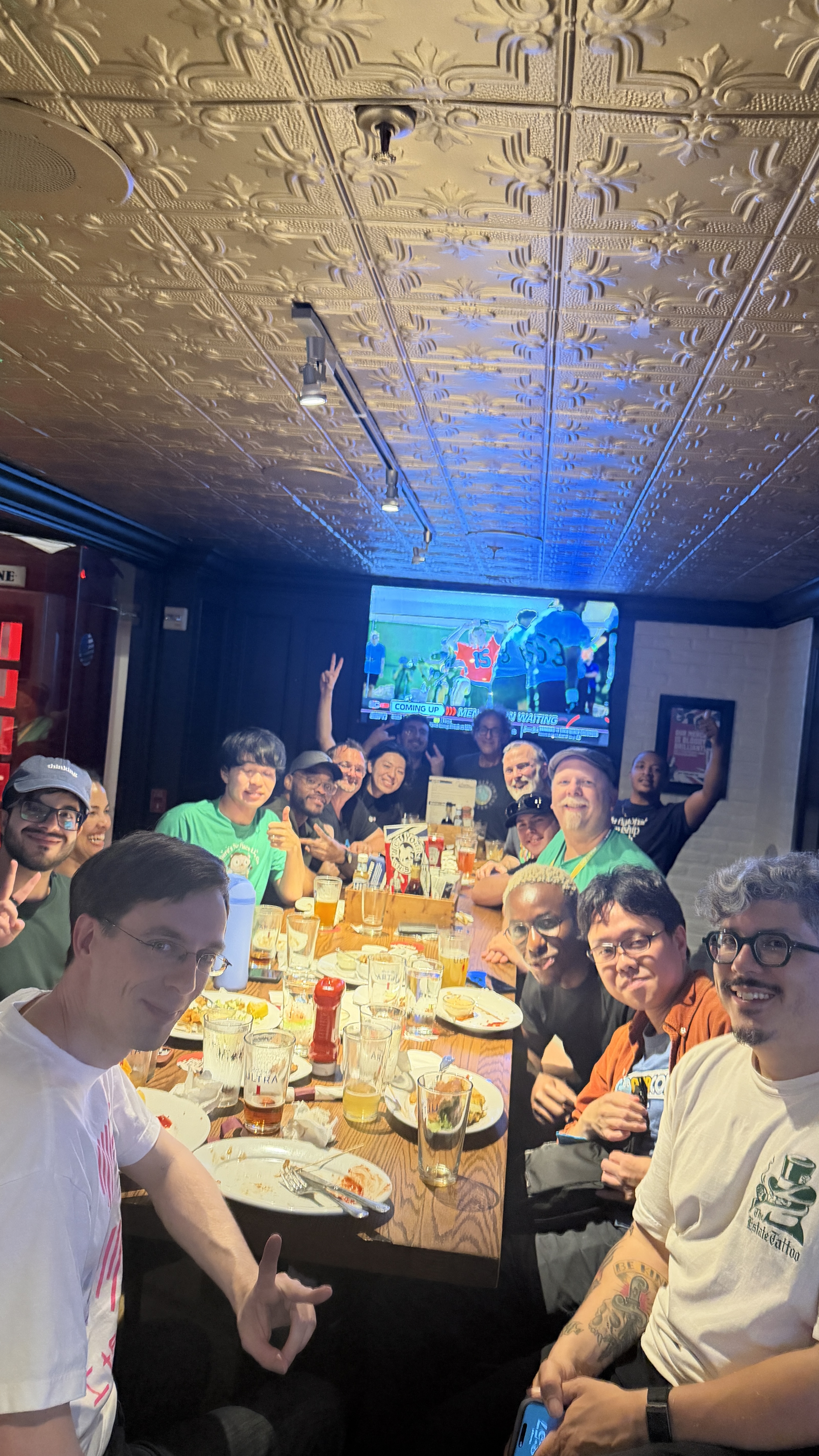
I definitely want to make it back to GopherCon next year. Although the conference seemed a bit smaller than when I attended in 2023, all the right components were still there. Good talks, good people, the right amount of inspiration, and learning new things. I’ll be building on the connections I made to see where those take me in the future.